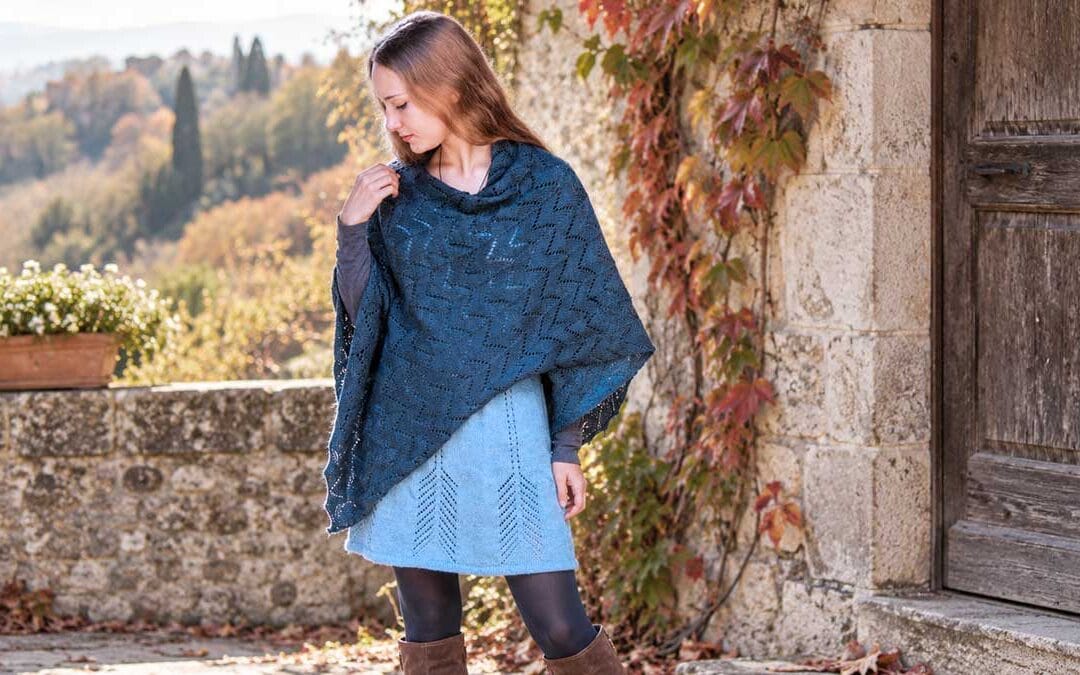
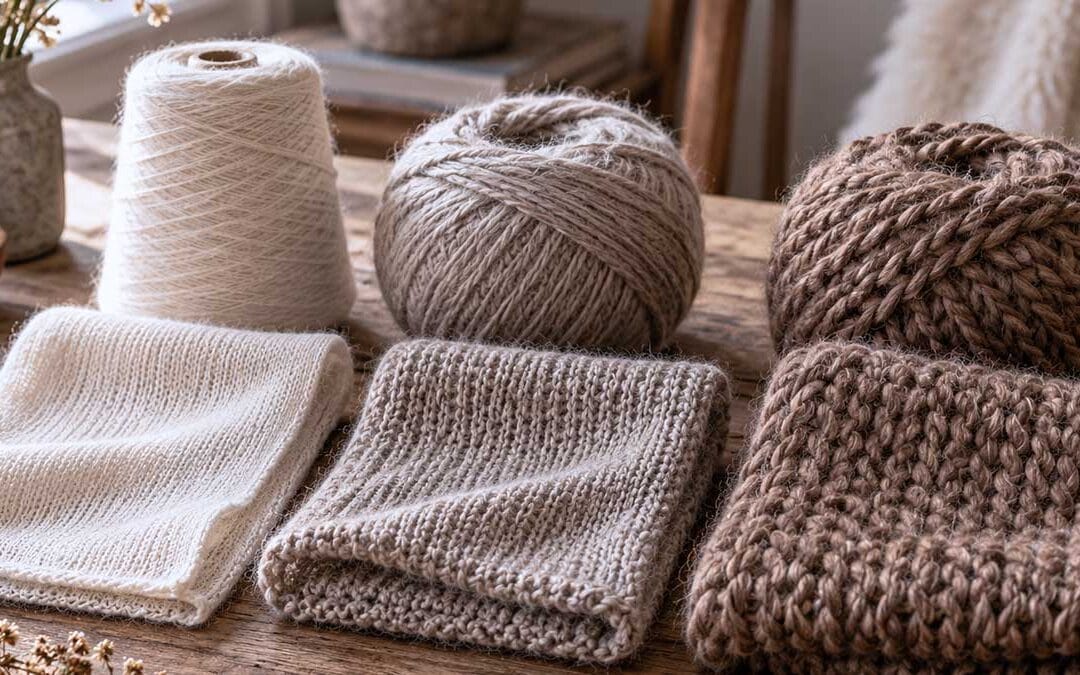
Alpaca knitwear can feel almost weightless the moment you pick it up. Other jumpers have a fuller, more enveloping feel that immediately brings winter to mind. Others are surprising because they can be warm without having the bulky appearance we usually associate with a heavy garment.
You may buy two different jumpers and find the same wording on both labels: 100% alpaca. Yet they can feel completely different. This is where the yarn begins to matter: its thickness, the number of strands used and the way it is worked. Before colour, design or stitch pattern, there is the yarn itself.
The fibre alone does not tell the whole story; first and foremost, it tells us the composition: 100% alpaca wool. Two garments made from the same fibre can have completely different weights and structures:
- one may be fine and soft, almost discreet on the body, and very light;
- another may be more compact, more substantial and noticeably heavier.
This does not mean that one is better than the other. It simply means that yarns with the same pure composition, but different thicknesses, have been chosen. Matching the yarn to the design makes it possible to create very different finished garments.
Why yarn thickness changes alpaca knitwear
When we look at a jumper, we rarely think about the thickness of the yarn used to make it. We notice the design and colour, touch the fabric and assess its softness. Then we imagine how it might fall once worn.
We rarely think about how many characteristics of alpaca knitwear depend on the yarn.
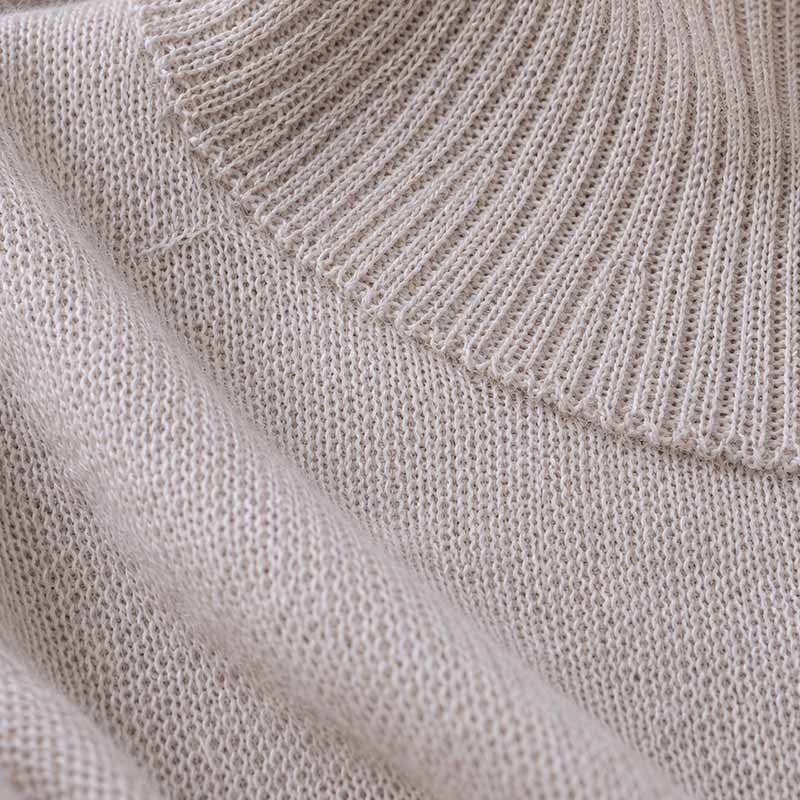
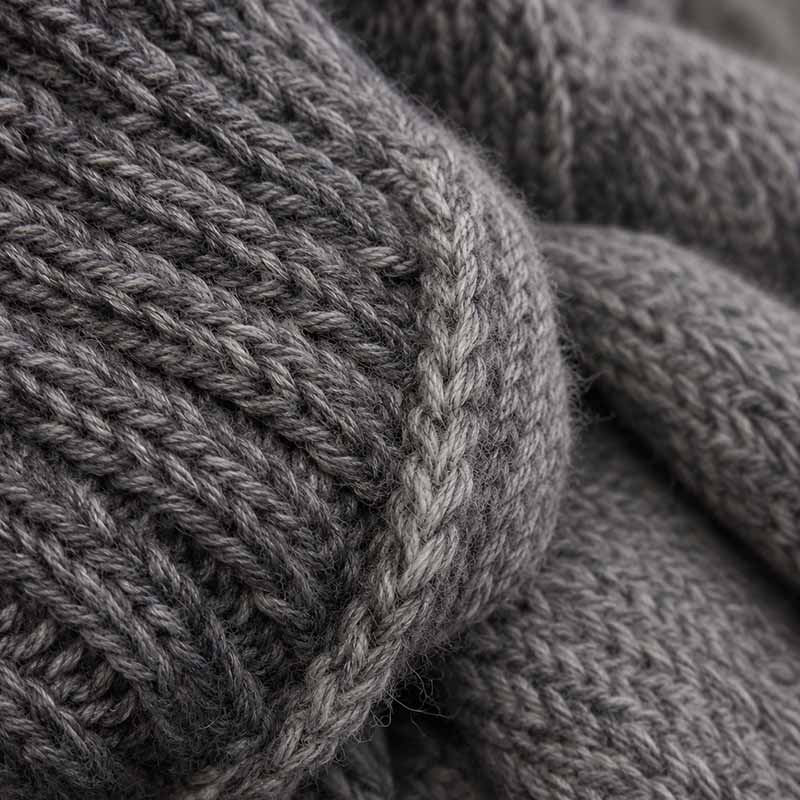
The thickness chosen affects the overall weight, density, drape, the way the garment feels when worn and the sensation of warmth. Starting with the same fibre – in our case alpaca wool – a finer yarn creates lighter knitwear, suitable for transitional weather and comfortable indoors. A thicker yarn, or yarn worked with several strands, creates a fuller and more substantial structure, suited to winter and outdoor wear.
This is one of the reasons why lightweight alpaca knitwear can feel so different from a denser garment, even when the composition shown on the label is exactly the same.
Describing a garment simply as “alpaca knitwear” therefore tells us a great deal about the fibre, but not the whole story of the finished piece.
To understand it more fully, we need to look at how the fibre becomes yarn before it becomes knitwear.
Single 3/10 yarn: a balance of lightness and warmth
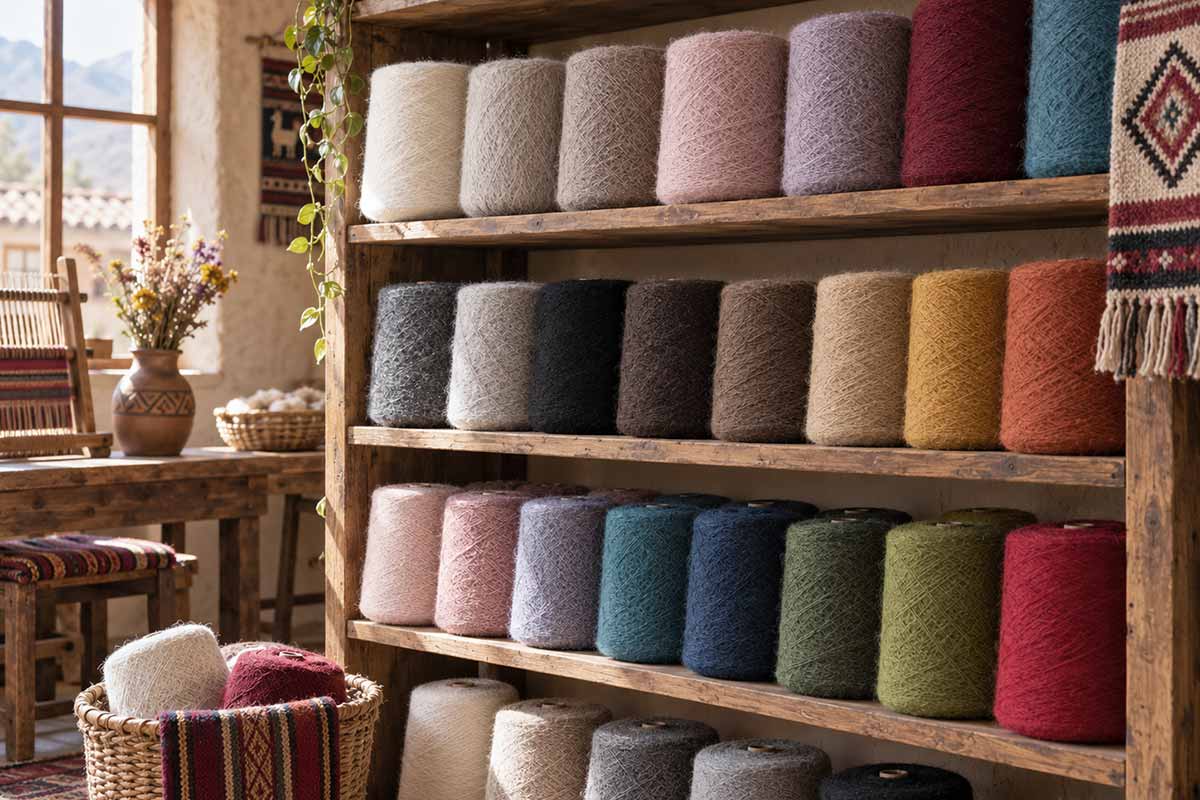
Among the yarns used for alpaca knitwear, 3/10 yarn worked as a single strand creates a garment with a noticeable presence without making it excessively heavy, bulky or too light.
It offers a kind of balance: the jumper retains a perceptible structure, works well from autumn into the colder season and, at the same time, does not have the appearance of particularly thick knitwear.
Once worn, this difference is felt above all in the overall character of the garment. The knit follows the body without weighing it down, while the yarn leaves room for the shape of the design and preserves freedom of movement.
It is interesting how automatically we tend to associate warmth with thickness. In a finished garment made from pure alpaca, however, the picture is more nuanced: the fibre, the thickness of the yarn and the way the knit is worked all contribute to the final result.
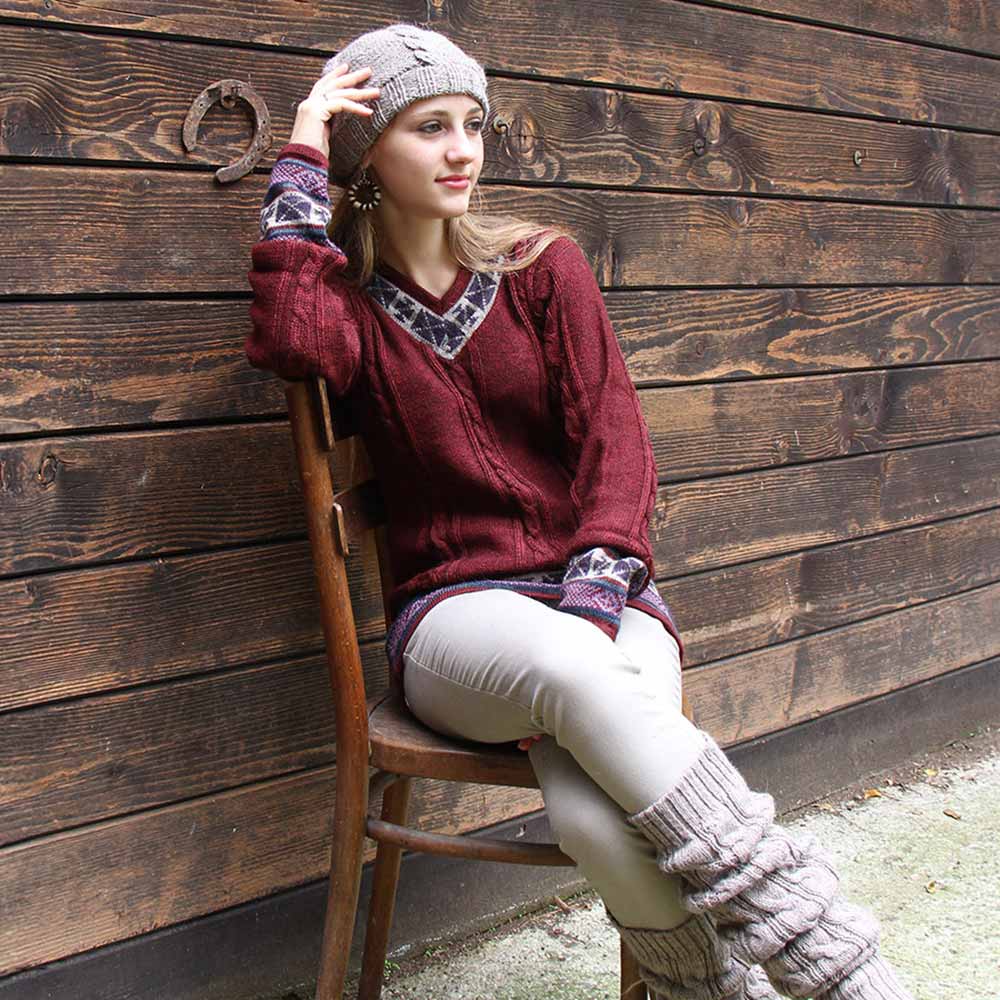
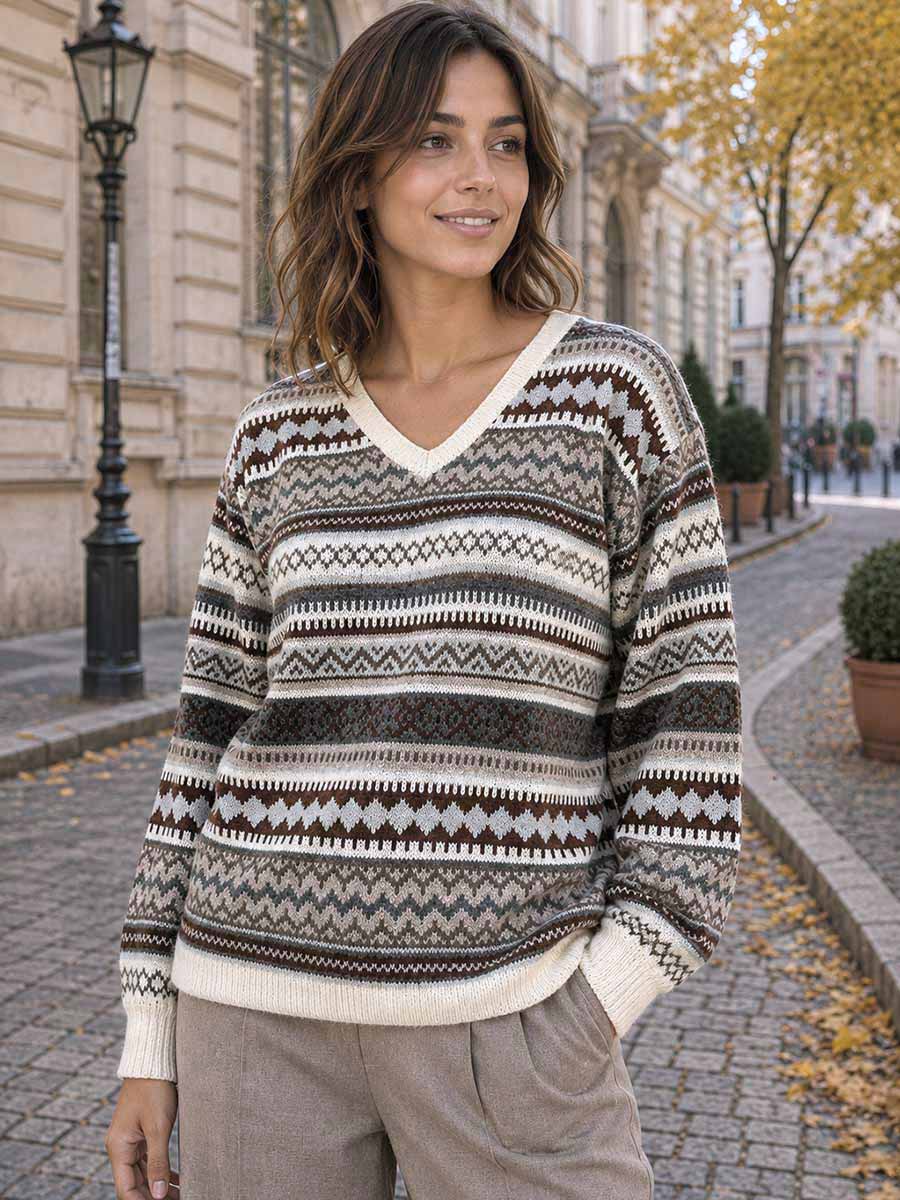
With this type of yarn, a jumper can therefore retain its winter character without becoming bulky. In a design with a geometric pattern inspired by ethnic textiles, the motif remains clearly visible, while borders, colour contrasts and decorative details can stand out without the thickness of the yarn becoming the dominant feature.
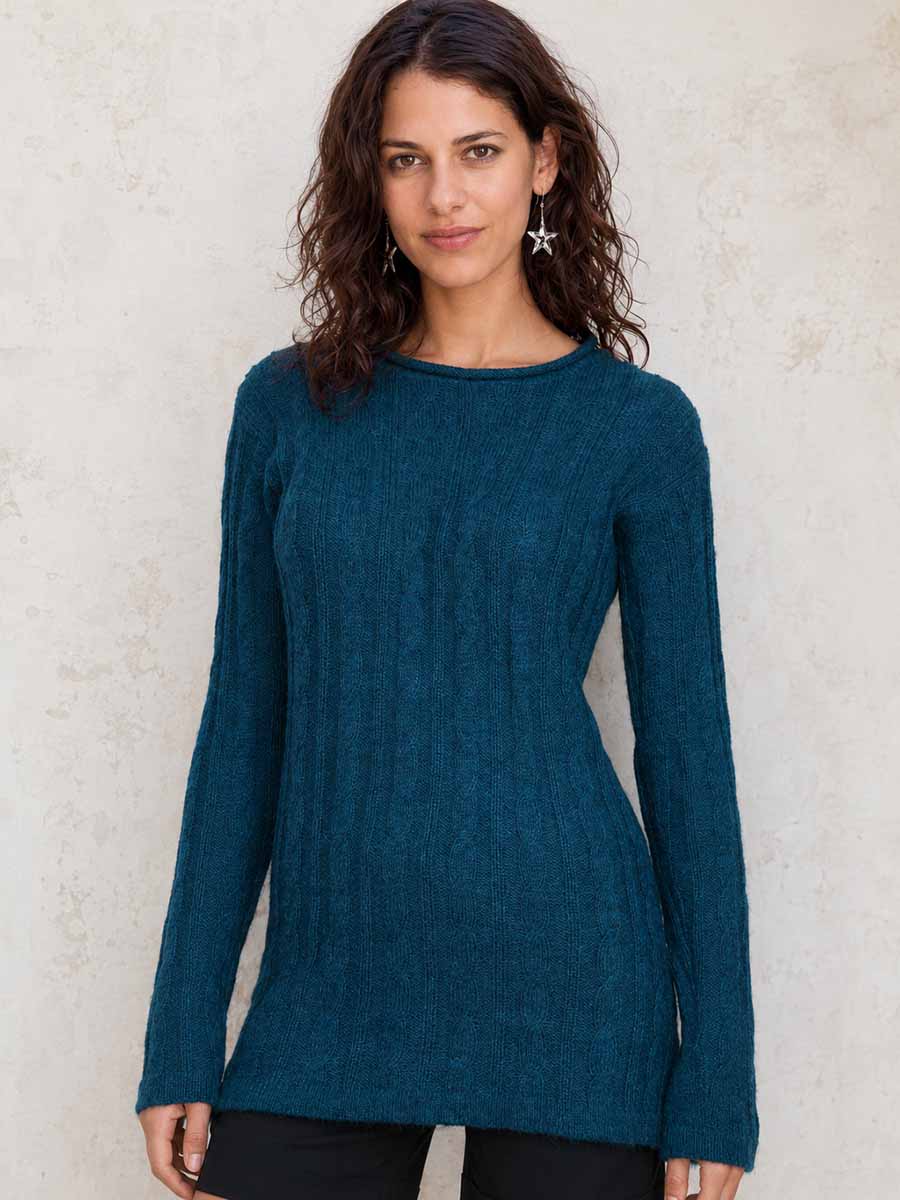
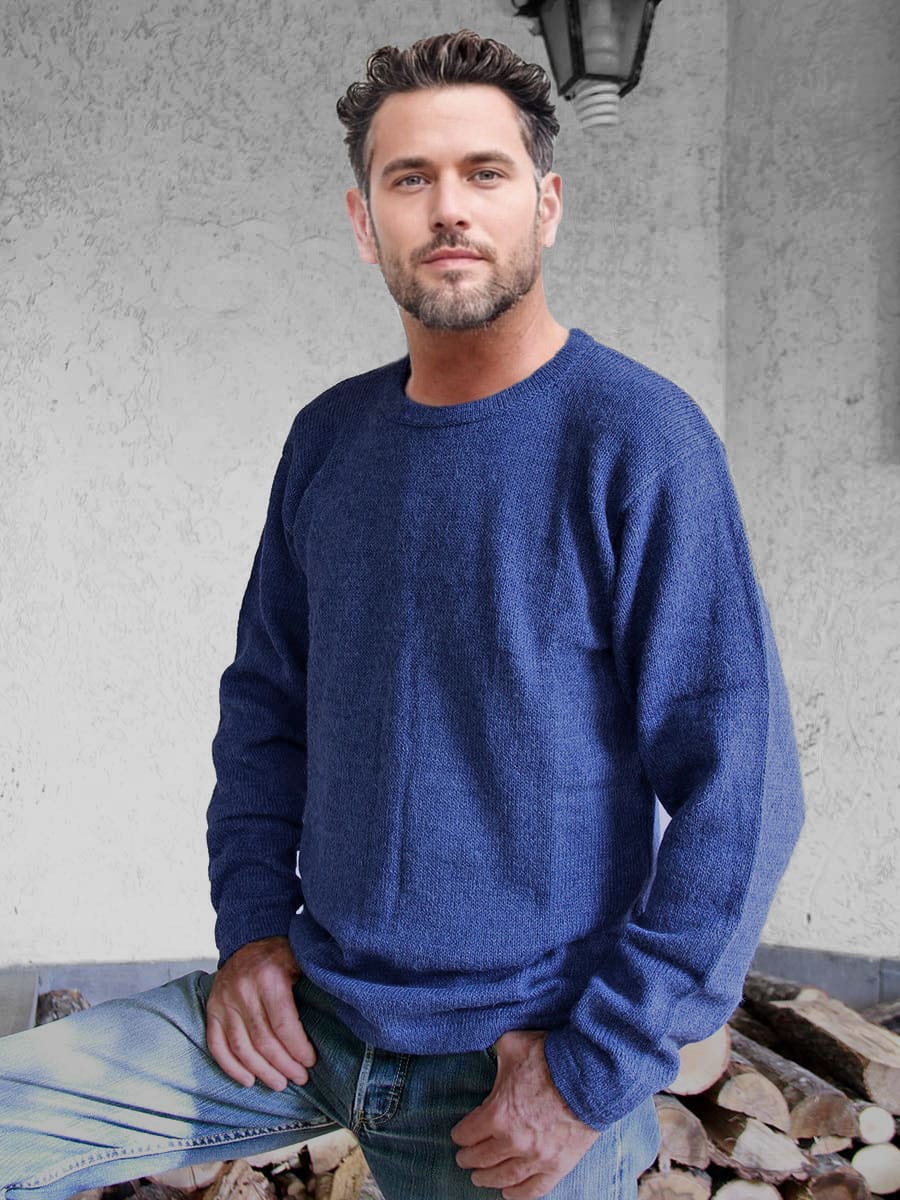
Three interpretations of single 3/10 yarn
Double 3/10 yarn: a fuller, more substantial knit
Using the same type of yarn, changing just one element can produce a very different result.
When a jumper in 3/10 yarn is worked with two strands, the knit gains more body. It becomes more substantial and heavier, and the difference can also be felt to the touch.
What is particularly interesting is that the fibre itself does not necessarily change: what changes is the way the yarn is used.

Yarn thickness is therefore far from a minor detail: it contributes to the weight, structure, the way a jumper feels when worn and its overall character. Two garments made from the same fibre can feel very different simply because the yarn has been chosen and worked differently.
Lightweight alpaca knitwear and a denser garment can therefore both carry the label “100% alpaca”: the thickness of the yarn and the way it is worked help determine the feel and character of the finished piece.
In the next article, we will continue this journey by looking more closely at finer yarns such as 2/16, and how they change the lightness, softness and character of alpaca knitwear.
Stay with us: the story continues.
¿Hablas español?